Here Is How Palestinians In Gaza Marked Eid Despite Israel's Genocide And Destruction
Palestinians had decorated the ruins of bombed buildings with lights and bunting as they gathered together to eat after Eid prayer.
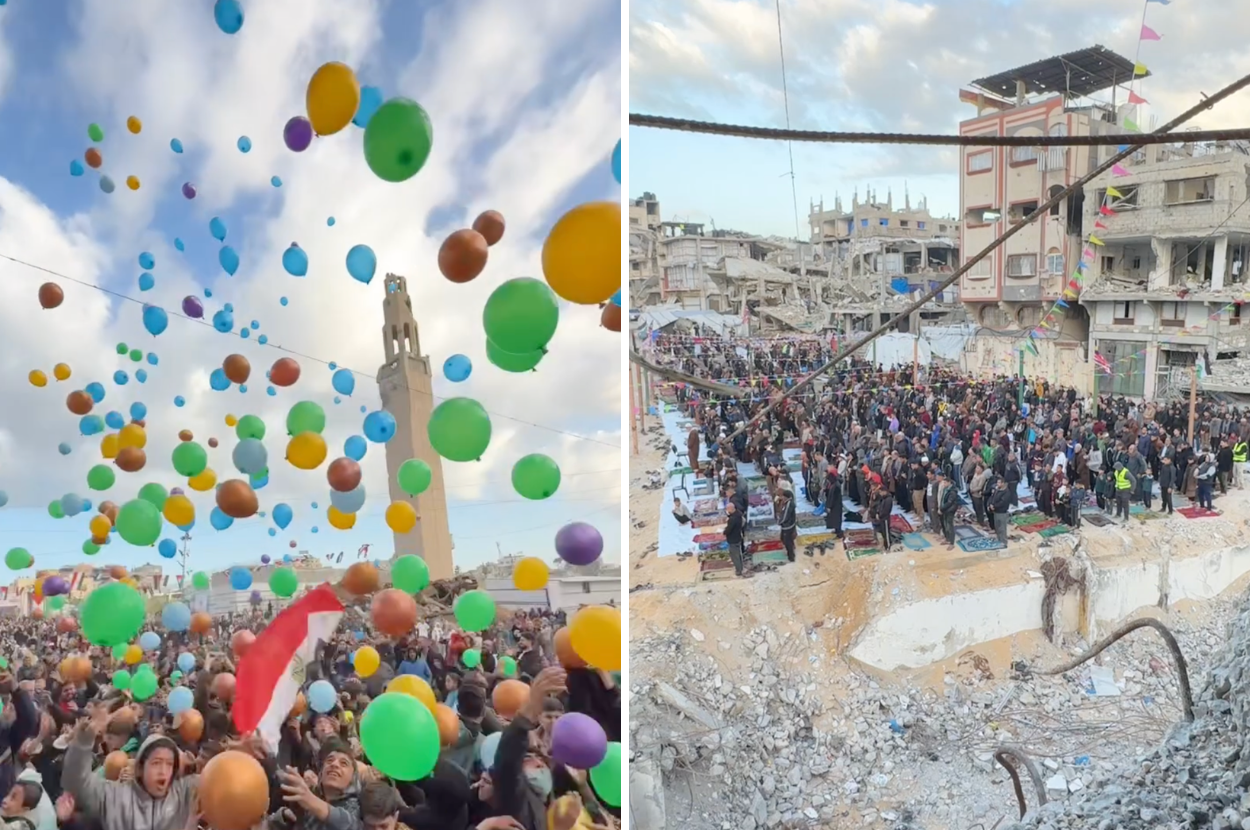
In Gaza, Palestinians found joy in marking Eid, the end of the Muslim holy month of Ramadan, despite Israel’s genocide and destruction.
During Ramadan, Palestinians across the Gaza Strip had fasted in tents, surrounded by the rubble of destroyed homes and overcrowded shelters, relying on donated meals, bread distributions and community kitchens to get through each day.
After the US and Israel launched an unprovoked war on Iran on Feb. 28, Israel closed the Rafah and Zikim crossings into Gaza over “security concerns”, blocking aid from entering the Strip.
Aid transfers from the occupied West Bank and Jordan were also suspended before the Kerem Shalom crossing partially reopened on March 3 for limited aid and fuel.
Even after the reopening, the Kerem Shalom crossing remained the only operational cargo crossing, creating what the UN Office for the Coordination of Humanitarian Affairs (OCHA) has dubbed a “major bottleneck” for incoming supplies.
Many families broke their fast with simple staples such as rice, lentils and bread, depending on what aid groups, community kitchens or local charities could provide.
On March 20, families in Gaza marked Eid in tents and temporary shelters, with children finding joy in preparing their best outfits to wear on Eid day and charities donated candy.
Videos posted on social media showed Palestinians had decorated the ruins of bombed buildings with lights and bunting as they gathered together to eat after Eid prayer.
One viral video showed children excitedly jumping around as they were surprised with dozens of balloons falling from the sky.
Traditional foods such as Feseekh, fish fermented in brine, remained part of the holiday for some, but the rising prices of the imported fish made it unaffordable for many.
More On Israel's Genocide In Gaza
 Sofia Hou
 Sofia Hou
 Cherry Mohamed