Iran Has Shut Down The Internet After 12 Days Of Anti-Government Protests That Are Only Getting Bigger
“The incident follows a series of escalating digital censorship measures targeting protests across the country and hinders the public's right to communicate at a critical moment,”

Iran’s government has shut down the internet following days of growing anti-government protests after the country's currency hit a record low.
Iran’s economy has been under pressure for years, largely due to US and EU sanctions that have restricted trade, oil exports and access to foreign currency.
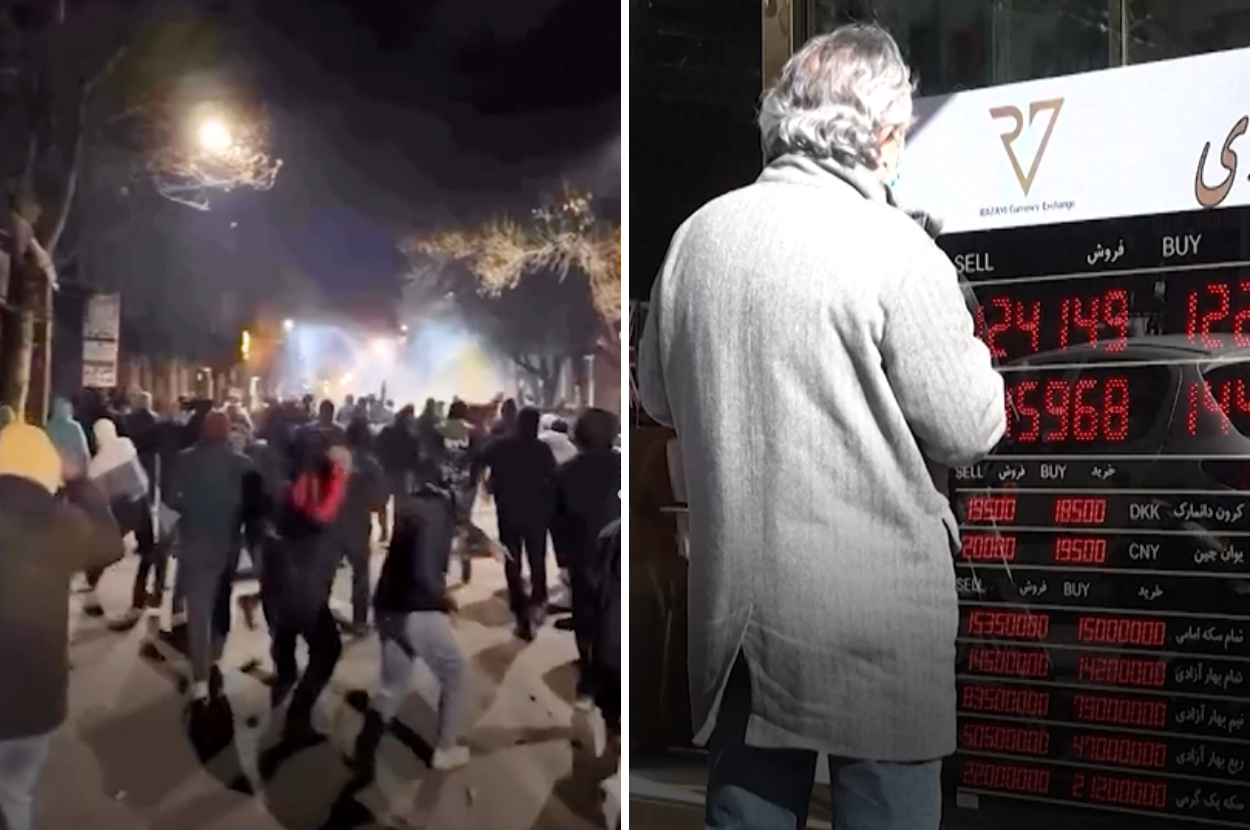
In mid-December, the Iranian rial reached its lowest at 1.42 million to US$1, and official records showed inflation exceeded 42% in December alone, sharply increasing the cost of goods.
On Saturday, Dec. 28, merchants in Iran’s capital Tehran began protesting soaring prices, shutting down shops in parts of the city as anger over the collapsing currency spilled into the streets.
The protests have since spread nationwide with people protesting in more than 300 locations across all of Iran’s 31 provinces, according to the US-based Human Rights Activist News Agency.
Students also joined the demonstrations, staging protests on university campuses across the country.
Iranian authorities have arrested a total of 2,171 people, with 165 being under the age of 18.
Protests have also killed 34 people, including four members of the security forces.
On the night of the 12th day of protests, on Thursday, Jan. 8, videos showed protesters taking to the streets chanting “Death to the dictator” and “Death to the Islamic Republic”, according to AP.
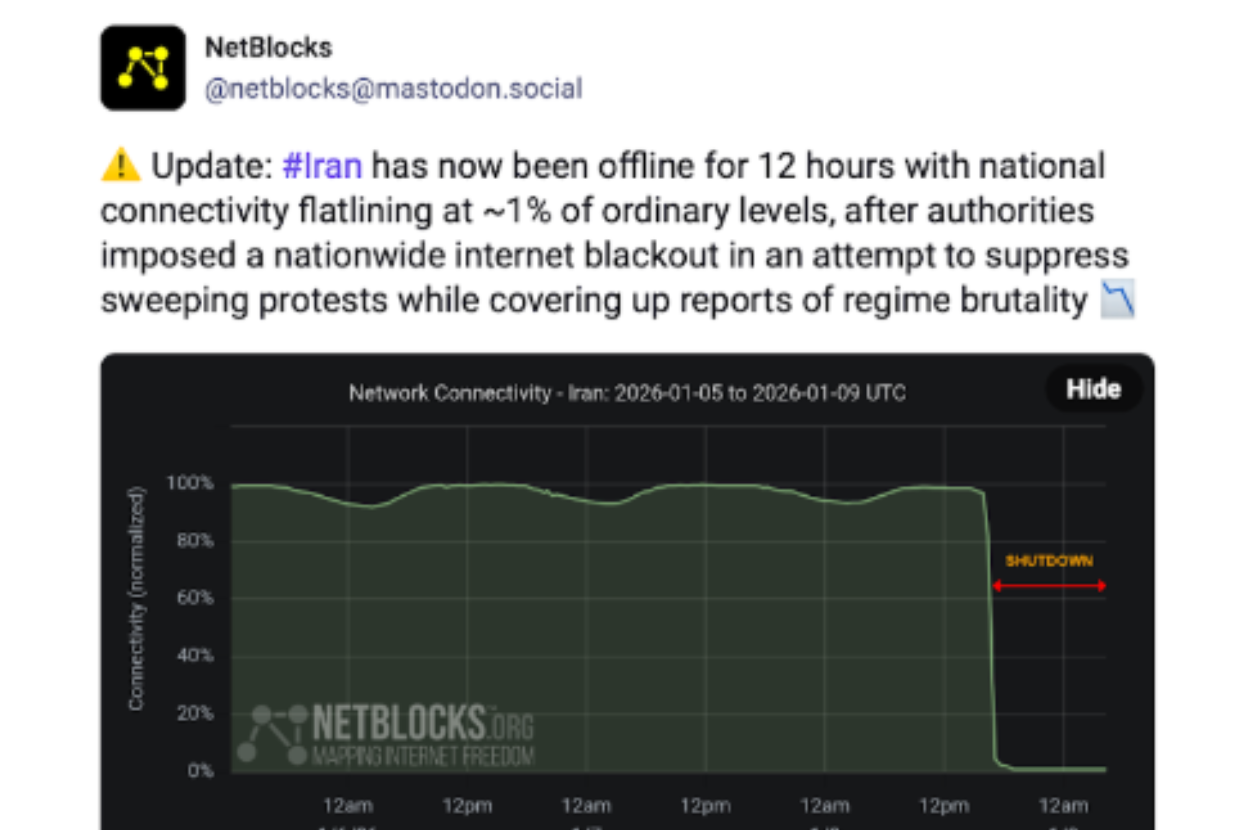
A few hours later, the global cybersecurity monitor, Netblocks, confirmed that Iran was “in the midst of a nationwide internet blackout”.
“The incident follows a series of escalating digital censorship measures targeting protests across the country and hinders the public's right to communicate at a critical moment,” Netblocks said.
Iran has been offline for at least 12 hours.
Iranian authorities have not acknowledged the internet blackout.
Internet blackouts are often used to “limit coordination, information-sharing, and the dissemination of protest footage”, according to the Human Rights Activist News Agency.
The demonstrations mark Iran’s largest protests since 2022, when nationwide protests rocked the country following the death of Mahsa Amini in police custody.
 Cherry Mohamed