The UN Has Passed A Historic Resolution Declaring The Transatlantic Slave Trade The “Gravest Crime Against Humanity”
The resolution calls on UN member countries to enter talks on "reparatory justice."

The UN General Assembly has passed a historic resolution declaring the transatlantic slave trade as the “gravest crime against humanity” despite push back from the US, Israel and Argentina.
Between the 16th and 19th century, European powers trafficked more than 13 million Africans, men, women and children, shipping them across the Atlantic, to work on plantations and in mines across the Americas and Caribbean.
Millions died before even reaching land, and those who survived were stripped of their freedom, their names and their families.
The resolution, led by Ghana and backed by African and Caribbean states, describes the transatlantic African slave trade as one of the most extreme and long‑lasting forms of inhumane injustice, calling it a “definitive break in world history.”
On Wednesday, March 25, the International Day of Remembrance of the Victims of Slavery and the Transatlantic Slave Trade, the UN General Assembly (UNGA) adopted the resolution, declaring the slave trade the gravest crime against humanity due to its "scale, duration, systemic nature, brutality and enduring consequences.”
The resolution passed with 123 votes in favor, while 52 member states, many of them European countries, abstained, and only three voted against — the US, Israel and Argentina.
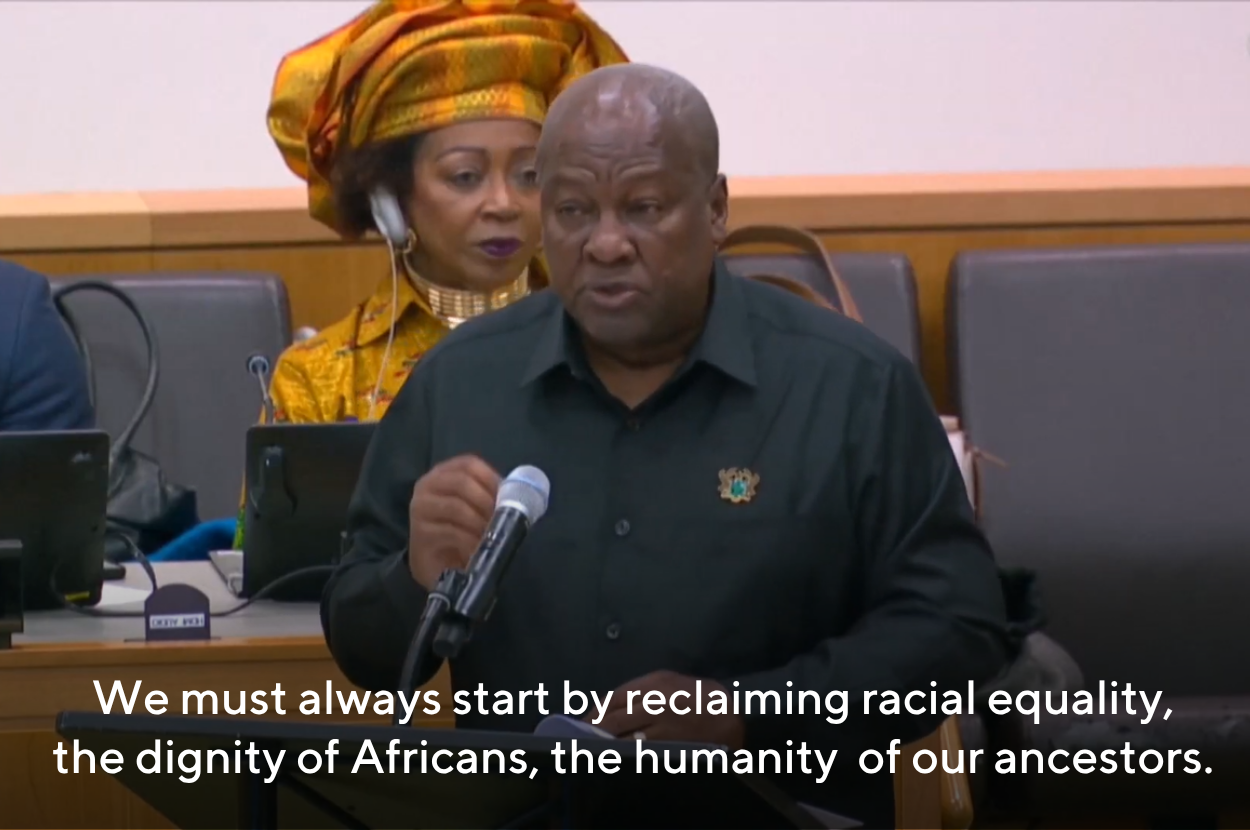
“The adoption of this resolution serves as a safeguard against forgetting… Let it be recorded that when history beckoned, we did what was right for the memory of the millions who suffered the indignity of slavery,” Ghana’s president Dramani Mahama said.
The resolution calls on UN member countries to enter talks on "reparatory justice," including formal apologies, financial compensation, restitution and policy changes to address ongoing racial discrimination, as well as the return of cultural artifacts taken from African countries to their countries of origin at no charge.
A US representative to the UN said the US opposed the language in the resolution, adding that it “does not recognize a legal right to reparations for historical wrongs that were not illegal under international law at the time they occurred.”
You Might Also Be Interested In
 Yoyo Chang
 Kassy Cho
 Steph Lu