People In Bulgaria Have Forced The Government To Resign After Weeks Of Massive Anti-Corruption Protests
This is the ninth government in Bulgaria to fall in five years.

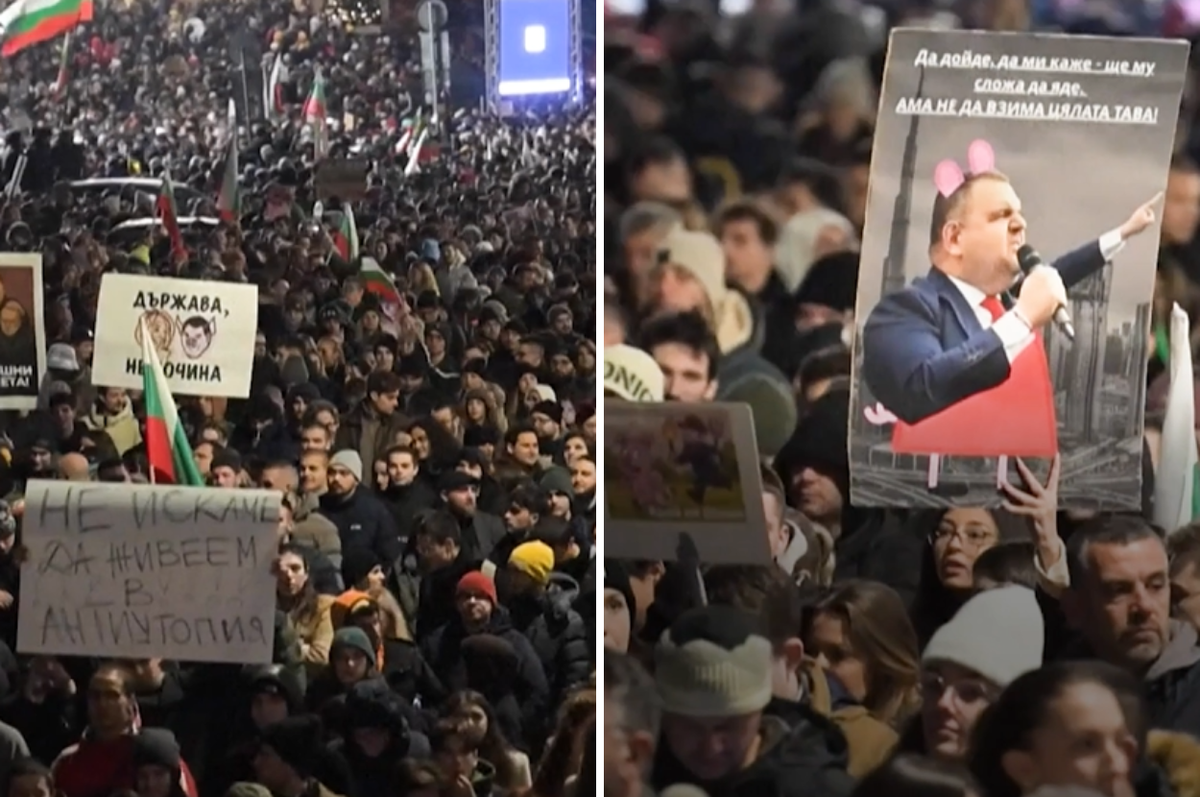
People in Bulgaria held massive anti-corruption protests for weeks, forcing the prime minister to resign after less than a year in office.
Thousands of people took to the streets in protest on Nov. 26, after the government announced ahead of the country's euro adoption, a controversial 2026 budget plan that proposed tax hikes and would make Bulgarians pay higher social contributions from their salaries.
The measures sparked anger at a time when many Bulgarians were already struggling with rising living costs.
On Dec. 1, the movement reached its peak, forcing the government to withdraw the budget plan the next day on Dec. 2.
However, the protests did not stop, and Bulgarians continued to demonstrate across the country, demanding the resignation of prime minister Rosen Zhelyazkov’s government, accusing the government, which had been in power since January, of elitism and widespread corruption.
Tens of thousands of Bulgarians, including large numbers of young people and students, marched across the country, chanting “Resign” and projecting messages like “Mafia Out” and “For Fair Elections” onto the parliament building.
The corruption accusations were particularly linked to Bulgarian politician and oligarch Delyan Peevski and his New Beginning party, which backs Zhelyazkov’s minority government.
Peevski has been sanctioned by the US and the UK for alleged corruption, bribery and embezzlement and is accused of influencing government policy to favor oligarchs.
On Dec. 10, about 100,000 people demonstrated in the capital city, Sofia, coinciding with a vote of no confidence taking place on Dec. 11, which would have made it the sixth one since the start of 2025.
Ahead of the vote, Zhelyazkov and his government resigned.
The Bulgarian Parliament unanimously approved the resignation on Dec. 12, with the cabinet continuing in a caretaker role while leaders try to form a new government.
This is the ninth government in Bulgaria to fall in five years.
Despite the government’s resignation, protests have continued, with organisers and many participants saying they will return to the streets if the next government is dominated by the same power structures they oppose.
Bulgaria is expected to finally adopt the Euro on Jan. 1,2026, and the snap election date has yet to be decided.
You Might Also Be Interested In
 Yoyo Chang
 Cherry Mohamed
 Sofia Hou