Kusama Yayoi, The Japanese Artist Known For Her Polka Dots And Infinity Mirror Rooms, Has Died At Age 97
Kusama died from multiple organ failure on Aug. 14 at a hospital in Tokyo, but the news was not made public until Aug. 27 on her official website.


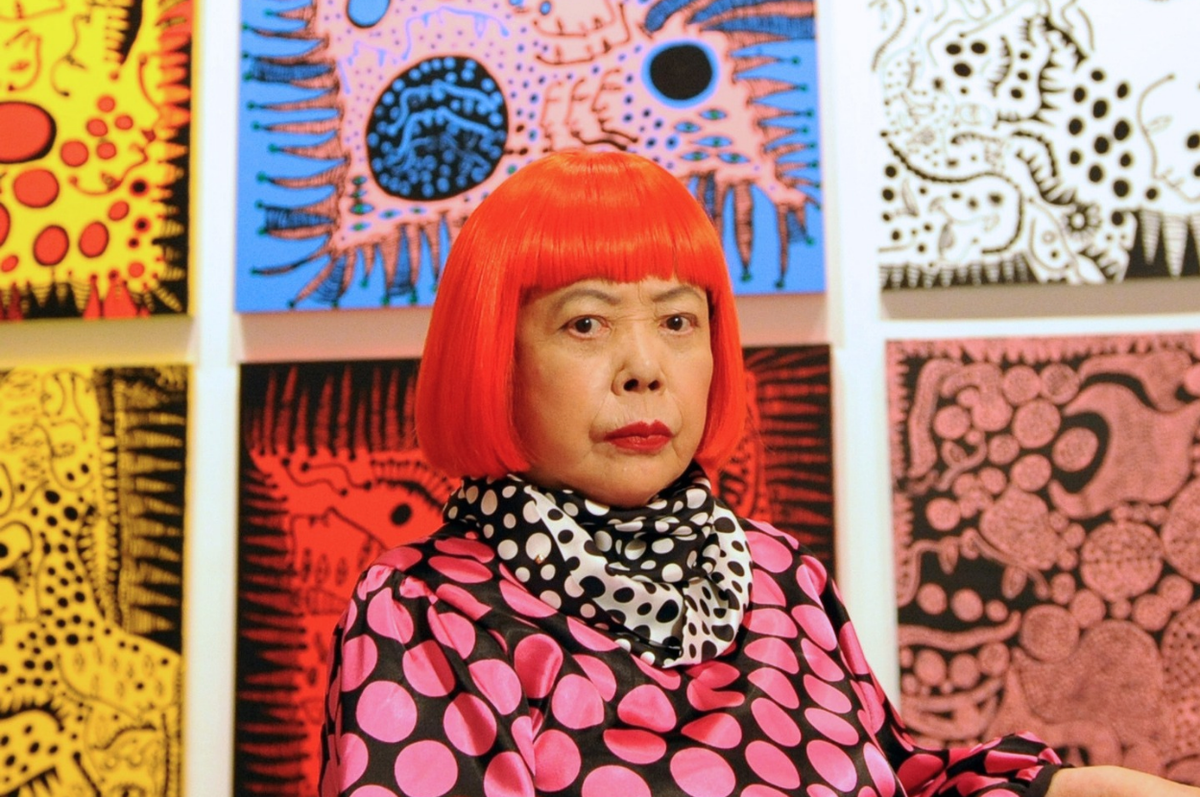
Kusama Yayoi, the Japanese artist known for her polka dots and mirrored "infinity rooms," has died. She was 97.
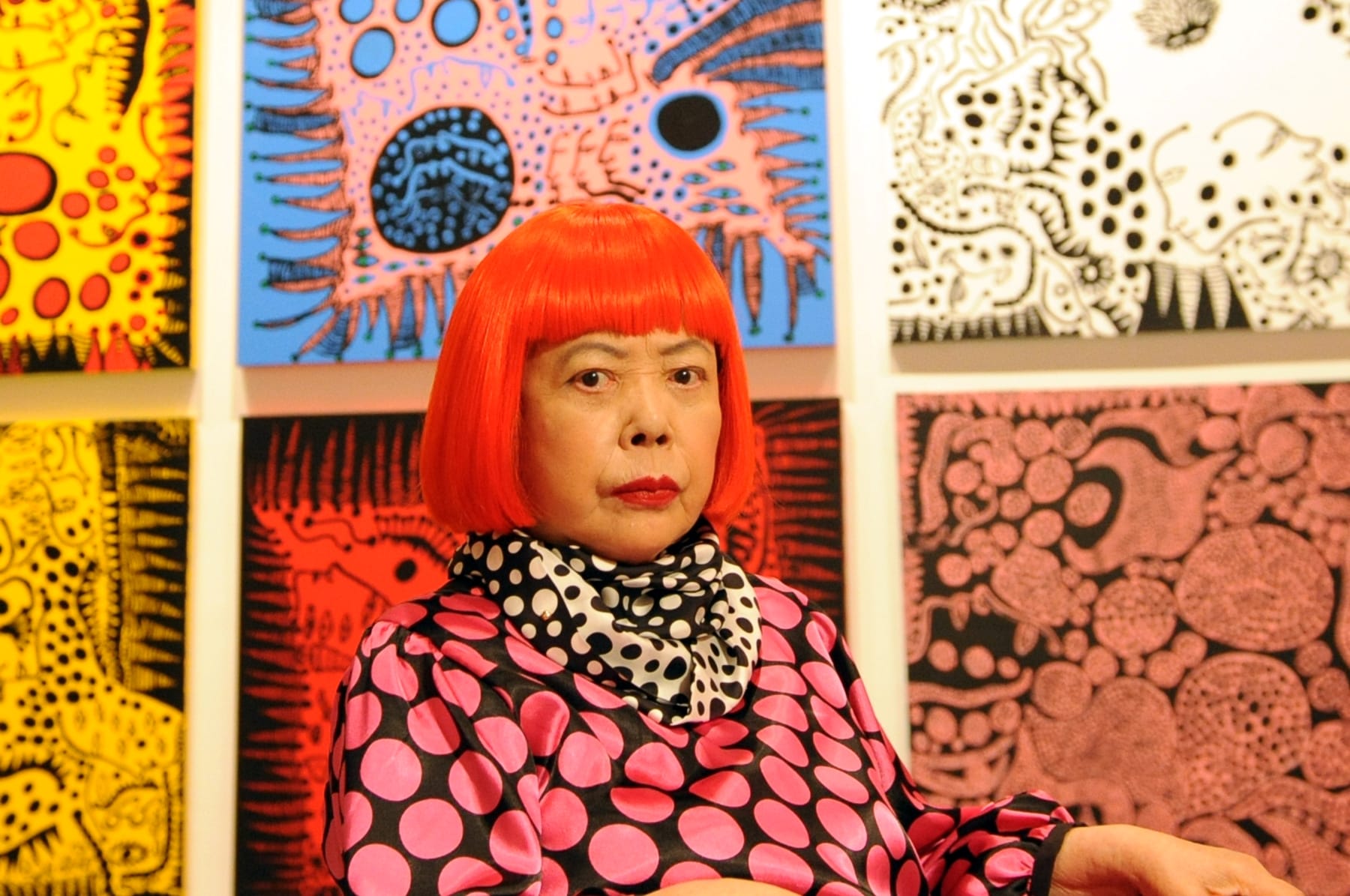
Kusama died from multiple organ failure on Aug. 14 at a hospital in Tokyo, but the news was not made public until Thursday, Aug. 27 on her official website.
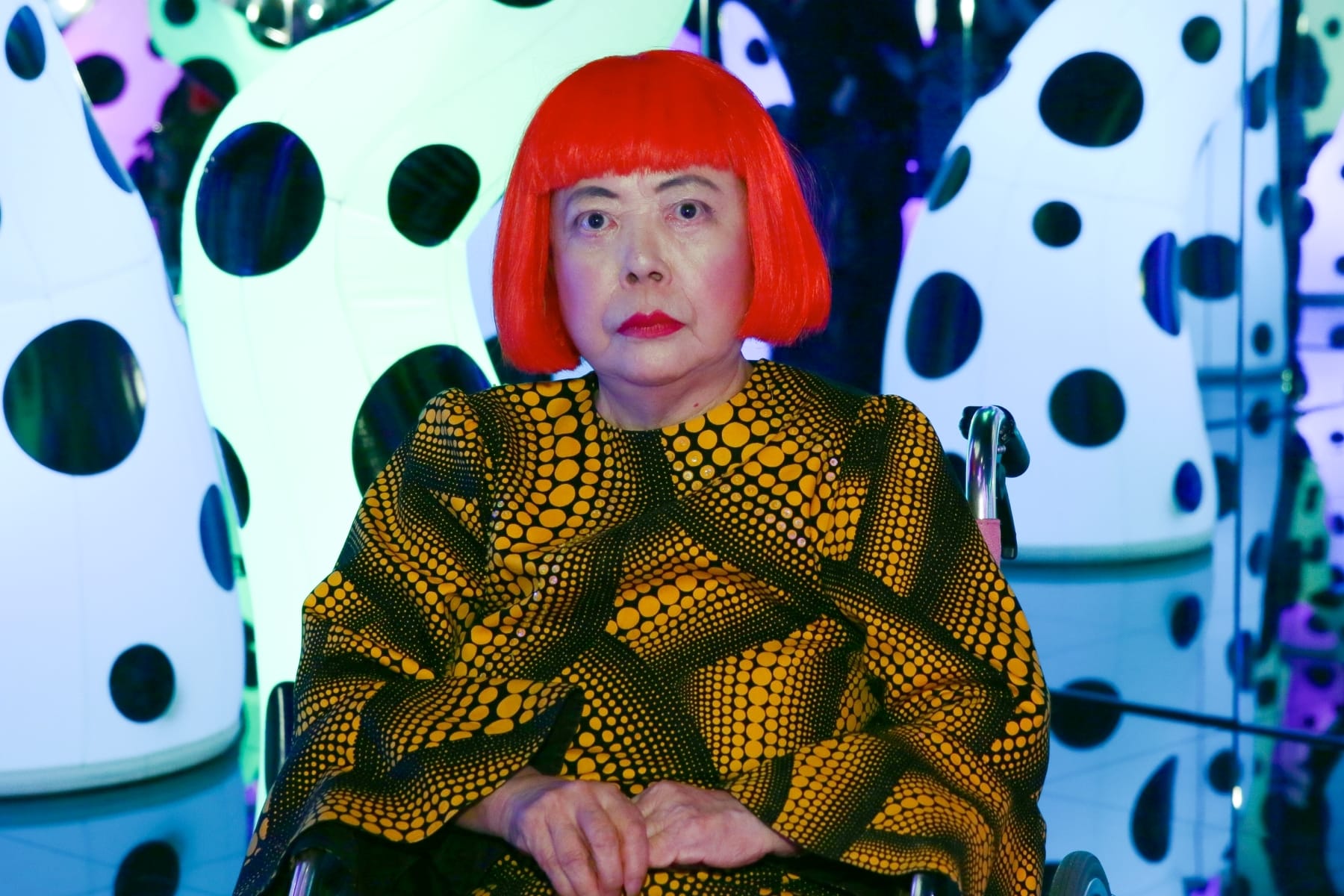
Kusama was born in 1929 in Matsumoto, a city in Japan's Nagano region, to a family that ran a plant nursery and seed farm.
From a young age, she suffered from hallucinations, once describing seeing the red floral patterns on a tablecloth spreading across the walls and onto her body, as if she were being swallowed by the patterns.
These experiences led her to begin drawing polka dots and net-like patterns at the age of 10, turning her hallucinations into art in what would become a lifelong practice she later called a form of self-therapy.
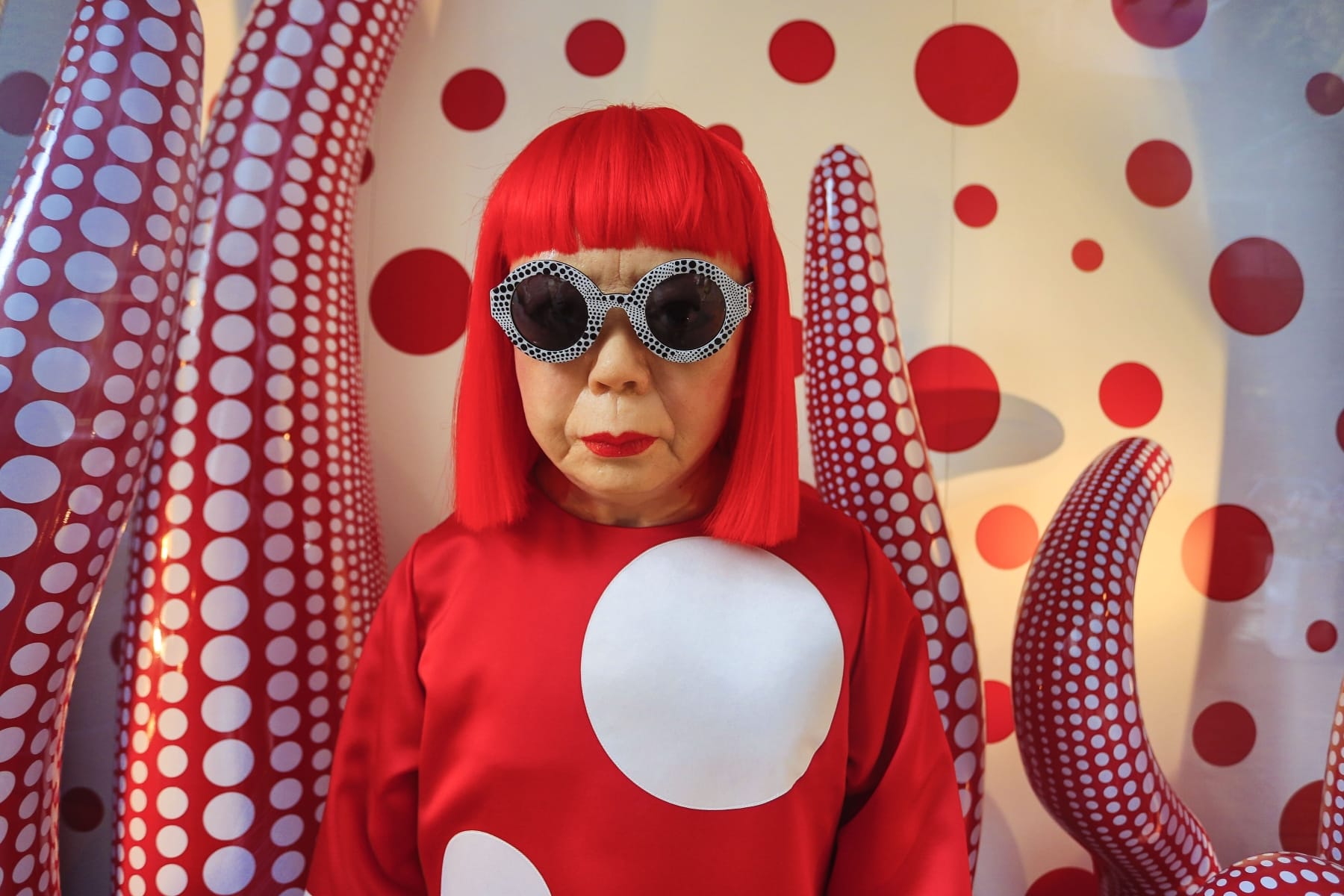
Growing up in a patriarchal Japanese society, Kusama’s artistic path was filled with hardship. She once said that Japanese society at the time was “too small, too enslaving, and too contemptuous of women.”
In 1957, at age 27, she left Japan for the US, first settling in Seattle before moving to New York.
There, she became part of the city's avant-garde art scene alongside artists like Andy Warhol, working across painting, sculpture and performance.
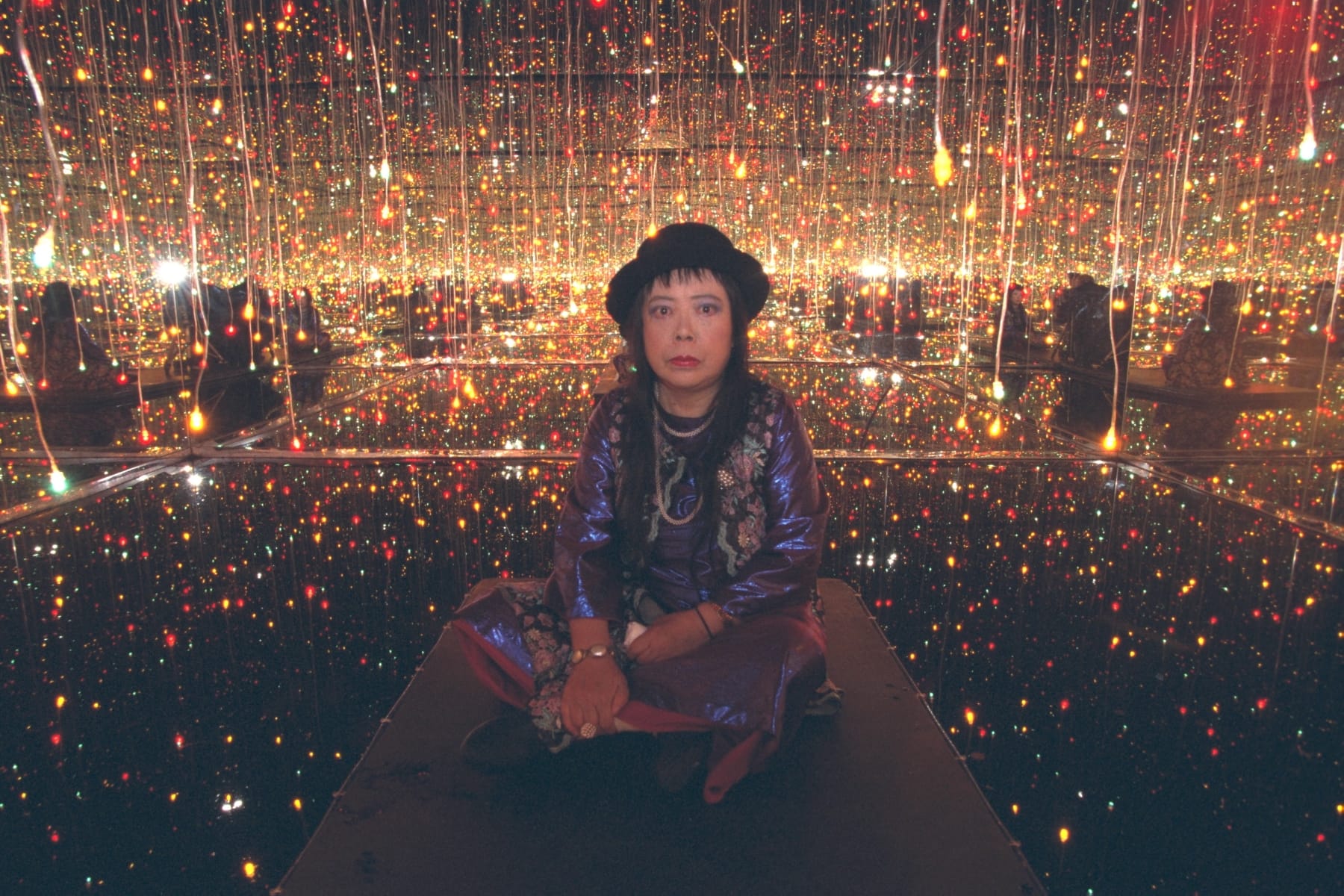
She gradually developed her distinctive artistic philosophy of “Self-Obliteration,” attempting to erase the boundary between the individual and the world by endlessly repeating and proliferating a single creative element.
The 1960s marked the peak of her career. In 1962, Kusama publicly exhibited her soft sculpture works for the first time. Not long after, Swedish-American sculptor Claes Oldenburg’s soft sculptures also quickly rose to prominence in the art world.
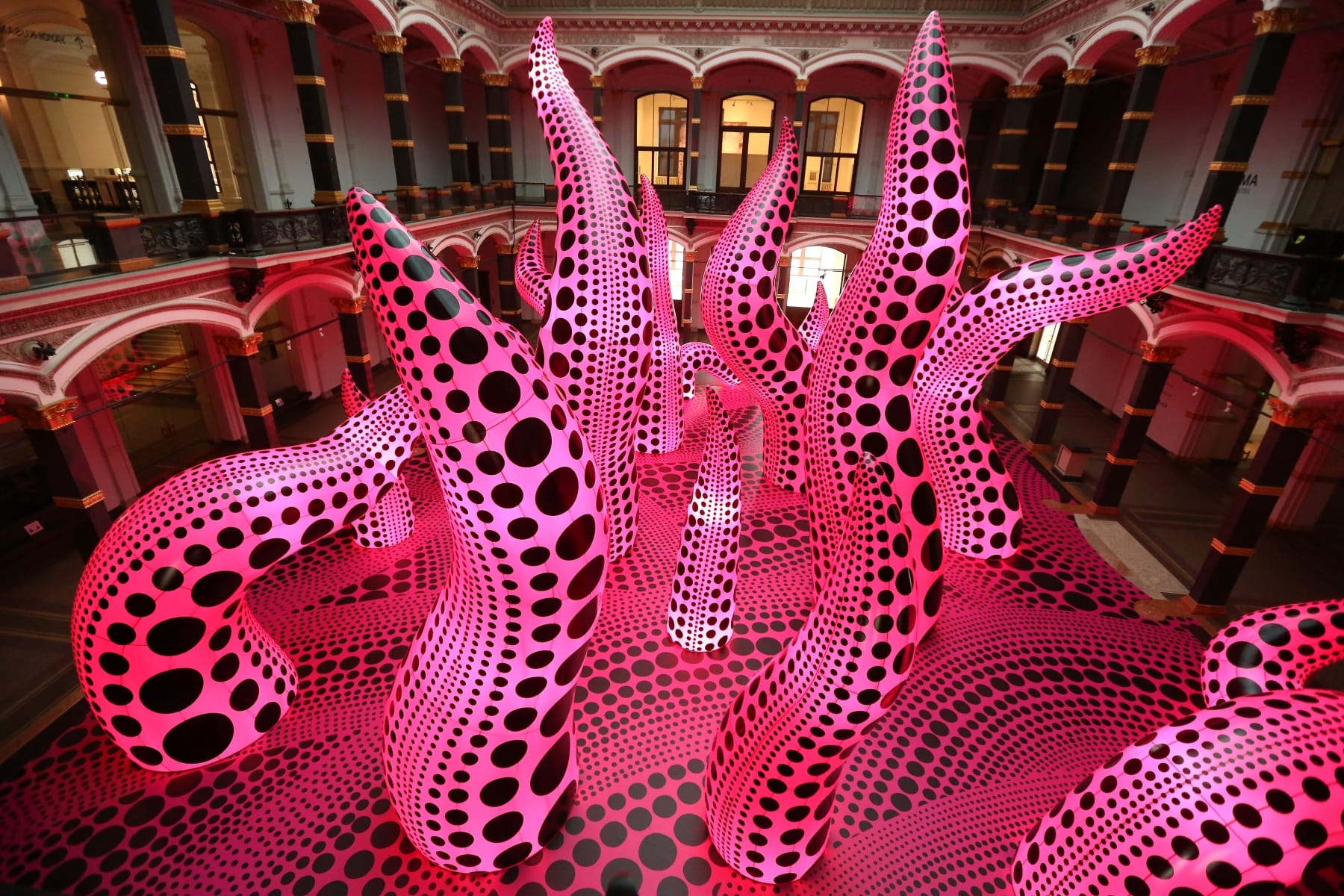
In 1963, Kusama exhibited “Aggregation: One Thousand Boats Show,” centered on a small boat filled with phallic-shaped soft sculptures, surrounded by 999 black-and-white reproduced photos of the boat covering the exhibition space.
Three years later, Warhol also exhibited “Cow Wallpaper,” filling the gallery walls with repeated cow-head images.

Kusama said she was surprised by what she saw as “copying,” though Warhol never responded directly.
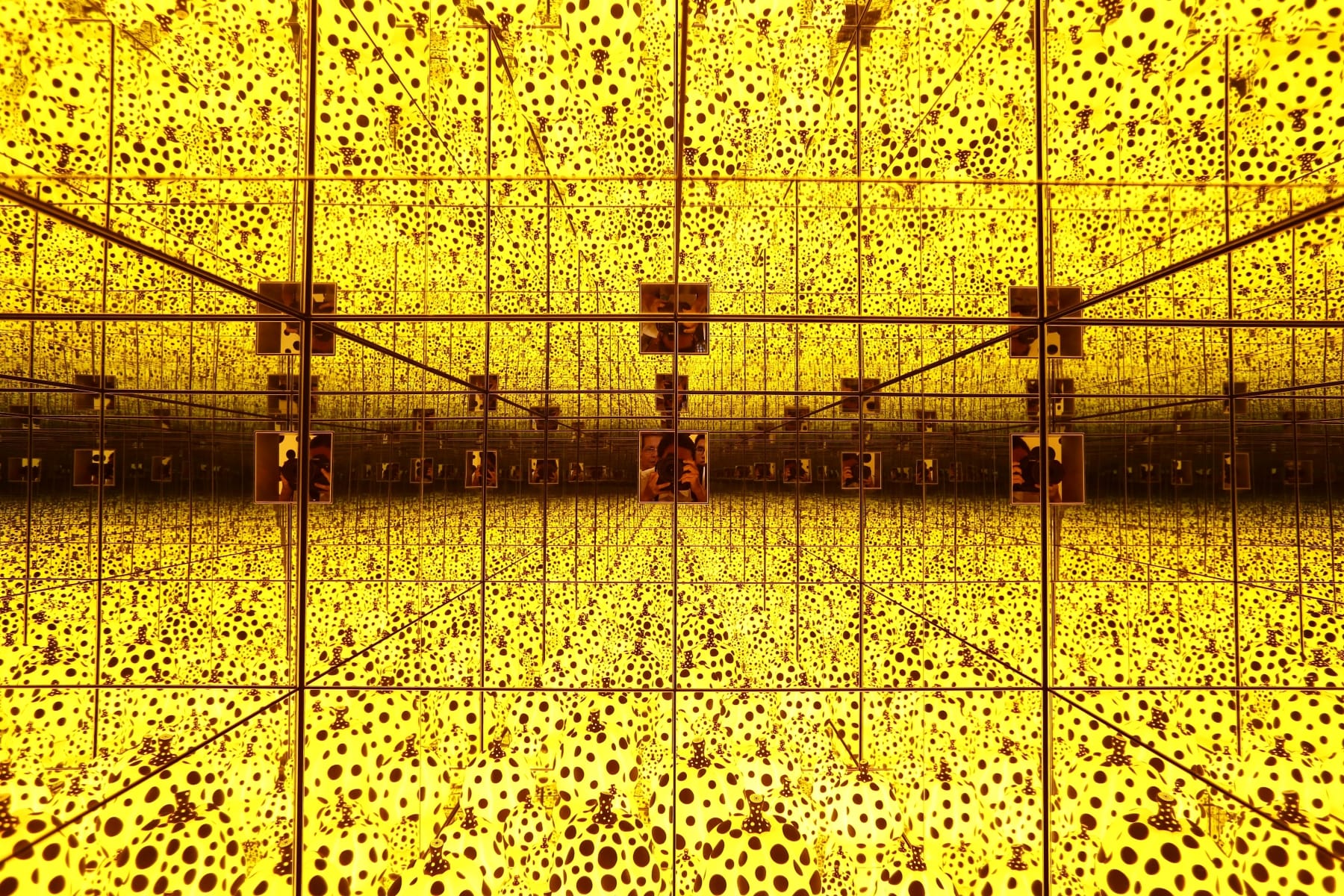
In 1965, Kusama exhibited “Infinity Mirror Room—Phalli’s Field,” using mirrors to endlessly reflect and extend fabric phallic-shaped sculptures, creating an infinite repetition of visual effect.
After that, several male artists, including Lucas Samaras, also exhibited mirror installations and achieved commercial success in the art world.
Despite her growing reputation among critics, Kusama struggled financially and continued to have hallucinations and panic attacks and attempted suicide in the mid-1960s.
In the early 1970s, she moved back to Japan and voluntarily checked herself into a psychiatric hospital in Tokyo, where she lived for the rest of her life.
She kept working from a studio across the street, saying that making art had kept her alive through decades of mental illness.
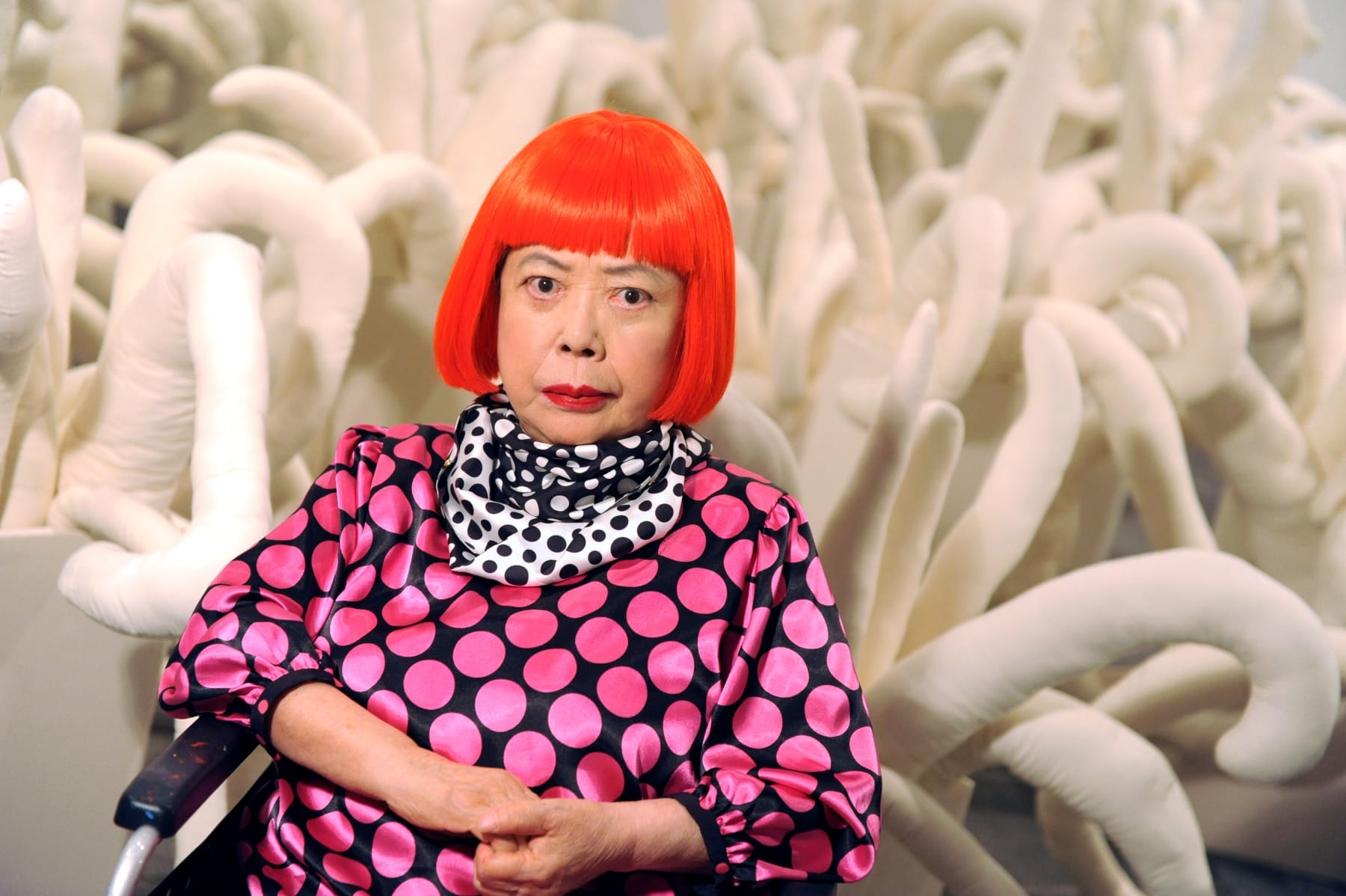
Her career was not without controversy. In 2017, Vice reported that Kusama had used racist language to refer to Black people in her 2002 autobiography and other written works.
She publicly apologized in 2023, saying in a statement she felt “deep regret” for using “hurtful and offensive language in my book.”
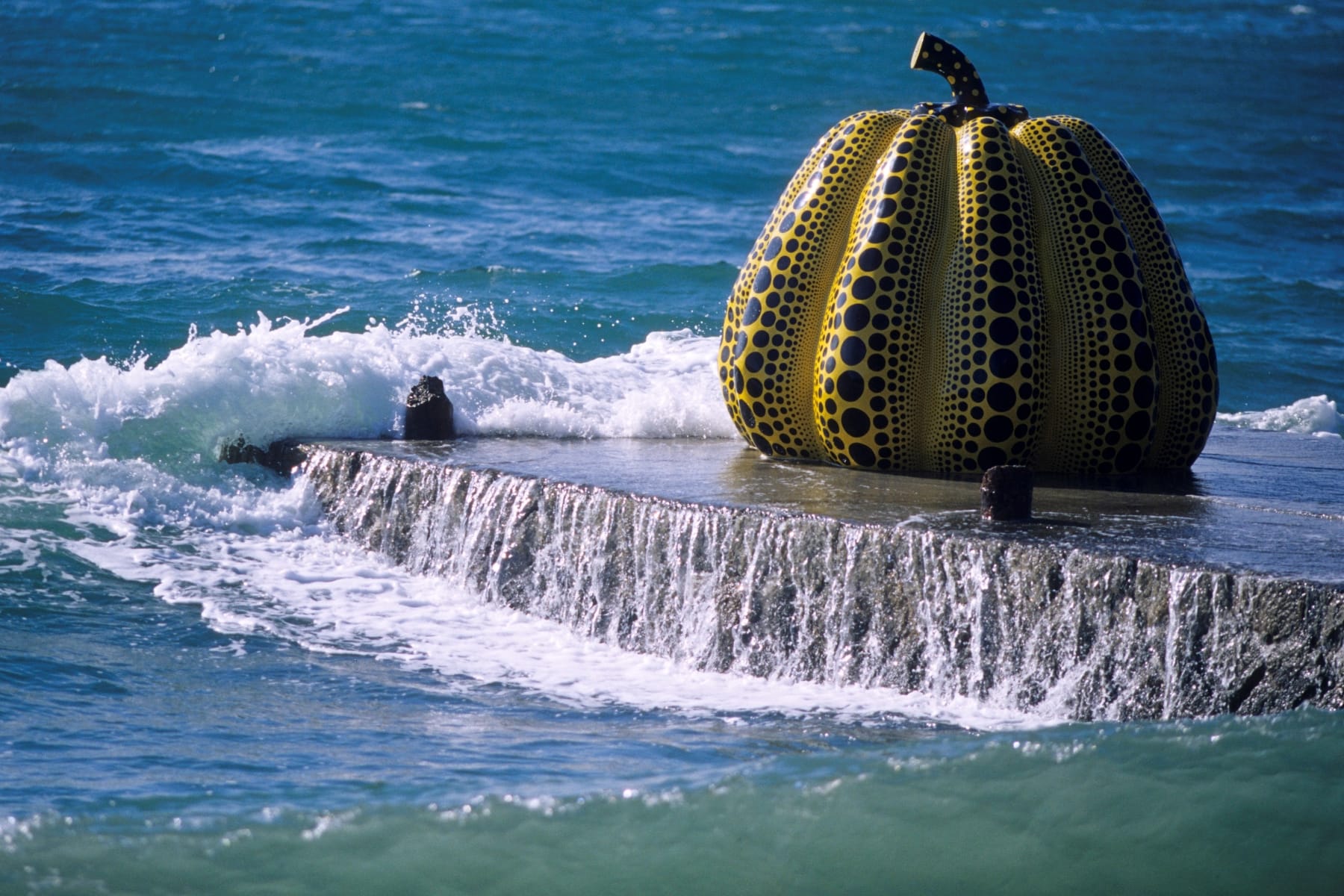
Kusama's global fame grew rapidly after 2010, with her pumpkin sculptures and Infinity Mirror Rooms drawing record crowds at major museums including the Hirshhorn in Washington and Tate Modern in London, and making her work a fixture on Instagram.
In 2017, the Yayoi Kusama Museum opened in Tokyo.
She also collaborated with brands including Louis Vuitton, and her paintings and sculptures went on to fetch millions of dollars at auction, making her one of the best-selling artists in the world.
You Might Also Be Interested In
 Kassy Cho
 Kassy Cho