
People In Argentina Held A Huge Protest Against The Far-Right President Cutting Funding To Public Universities
Organizers estimated about 600,000 people attended the protest in the capital, and over 1.5 million people joined the protests nationwide.

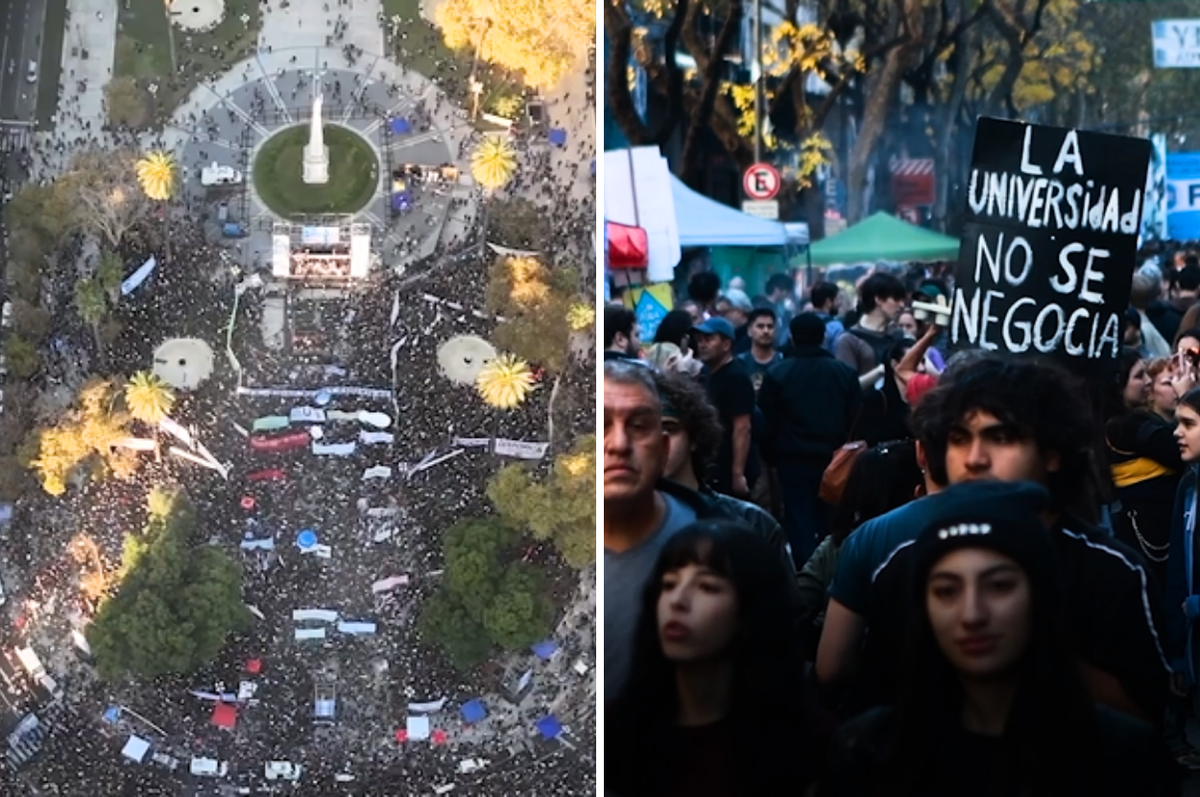
Tens of thousands of people in Argentina have taken to the streets to protest far-right president Javier Milei’s plans to cut university funding, in one of the largest demonstrations since he took office.
Argentina’s public universities have been tuition-free since 1949, heavily relying on the government to provide funding.
In 2025, Argentina’s congress approved a university budget that would simply keep funding in line with inflation and raise professors’ salaries accordingly.
Without it, professors’ salaries have dropped more than 30%, according to teacher unions.
However, Milei’s government has refused to implement it, instead challenging the legislation in the Supreme Court.
Milei, who was elected in 2023, had run on a “chainsaw plan” to close the ministries of culture, women, education and others to reduce government spending, constantly describing universities as institutions of “woke” indoctrination.
On Tuesday, May 12, universities, teacher unions and student organizations organized a protest in Buenos Aires, to demand the government to comply with the law.
People were seen holding signs reading, “studying is a right not a privilege” and “the greatest achievement was that the university became filled with the children of workers.”
Organizers estimated about 600,000 people attended the protest in the capital, and over 1.5 million people joined the protests nationwide, according to DW.
“It’s very clear this government is determined to defund public education,” a 24-year-old law student told AP. “University is a source of pride for us. It is the best thing we have.”
This is not the first time people in Argentina have marched over university funding. In 2024, hundreds of thousands also demonstrated against Milei’s cuts to public education and refusal to follow the law.
More On Argentina
 Sofia Hou
 Isha Jain