
Zambia Canceled The World’s Largest Digital Rights Conference Last Minute After China Pressured It To Exclude Taiwan
This is the first time in Rightscon’s history that the event has been canceled.

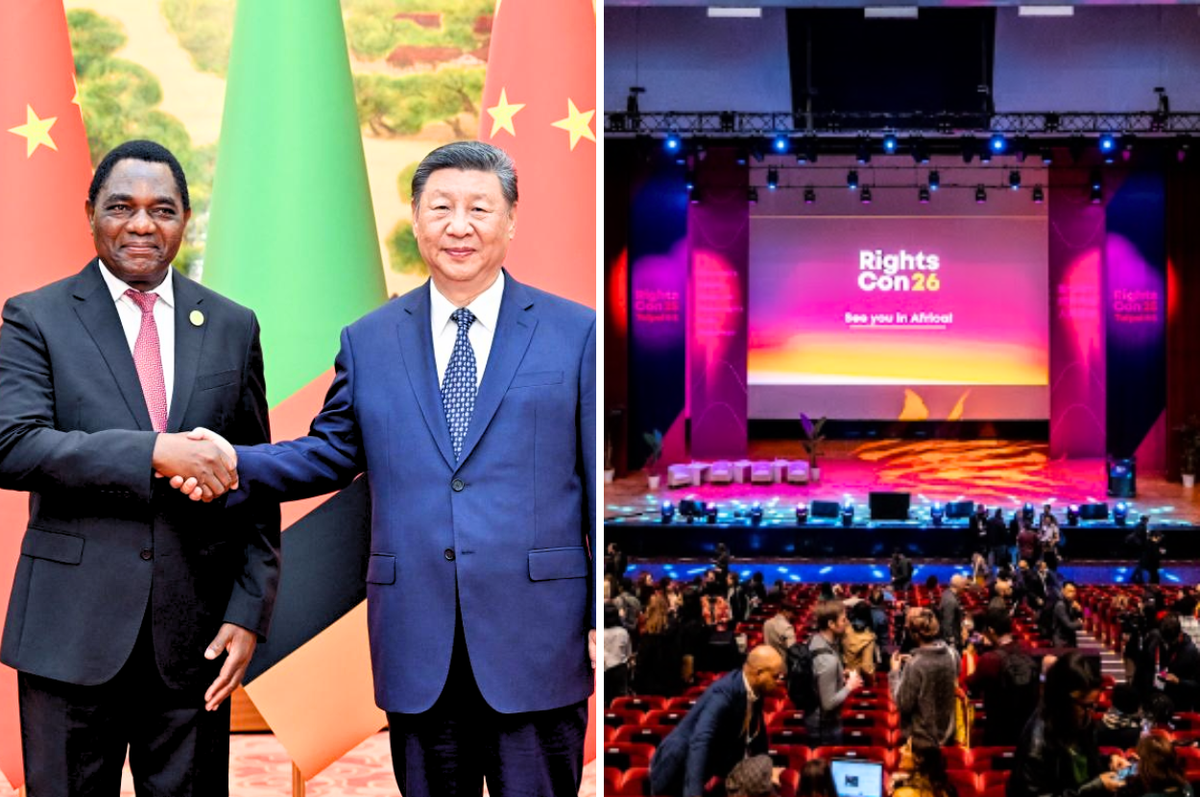
RightsCon 2026, one of the world’s largest digital rights conferences, has been canceled just days before it was due to begin in Zambia, after the Chinese government put pressure on Zambia to ban Taiwanese participants from attending.
The annual summit, organized by Access Now, an international nonprofit that works to protect digital rights, including freedom of expression and privacy online, was scheduled to take place in Zambia’s capital, Lusaka, from Tuesday, May 5 to Friday, May 8.
More than 2,600 in-person participants and 1,100 online attendees from over 150 countries were expected to attend.
On Monday, April 28, Zambia’s state media announced that the government had “postponed” the event.
Organizers said they had not been formally notified before the announcement.
Access Now said it only received official confirmation on Tuesday, April 29, in a letter sent via WhatsApp by Zambia’s Ministry of Technology and Science.
According to the letter, the postponement was due to the need for “comprehensive disclosure of critical information” to ensure the event aligned with Zambia’s “national values.”
However, Access Now said it believes foreign interference was behind the decision.
The organization said it was informed by government officials that diplomats from China had raised concerns about Taiwanese civil society participants attending the conference.
Access Now said it was then told informally that the event could only proceed if certain participants were excluded and some topics were moderated.
“This was our red line… the conditions set before us were unacceptable and counter to what RightsCon is,” the organization said in a statement.
This is the first time in Rightscon’s history that the event has been canceled.
The event had been planned in Zambia as part of a commitment to return the conference to the African continent, and the Access Now team had been engaged in extensive preparations and planning with the Zambian government since 2024.
Amnesty International condemned the move as an instance of Chinese transnational repression, which is when governments reach across national borders to repress and silence dissent.
“The apparent coercive pressure behind the de-facto cancellation of RightsCon is a clear sign of a growing and dangerous pattern of Chinese authorities abusing their power and influence over other governments to silence dissent and restrict fundamental rights, in particular those of individuals the Chinese state deems as a threat,” Amnesty International said.
Taiwan’s government also blasted China for the cancellation, saying in a statement that the move was another attempt to isolate Taiwan internationally.
The government said Beijing's actions were intended to "force the international community to ignore Taiwan's free and democratic system" and pressure human rights activists around the world to remain silent about surveillance and oppression by authoritarian states, state media Focus Taiwan reported.
United Nations Special Rapporteur Gina Romero said on X she was “deeply concerned” by the decision, calling the requirement for disclosure of topics “a clear violation of the rights to freedom of assembly, association and expression, and a deliberate attack on civic space.”
Read More
 Cherry Mohamed
 Flavie Chen
 Kassy Cho