Pope Leo Wrote A 42,000-Word Manifesto Warning Against AI, Saying It Must Be “Disarmed”
The pope said AI should not be feared but warned that it cannot be allowed to develop without moral responsibility, public accountability and human control.

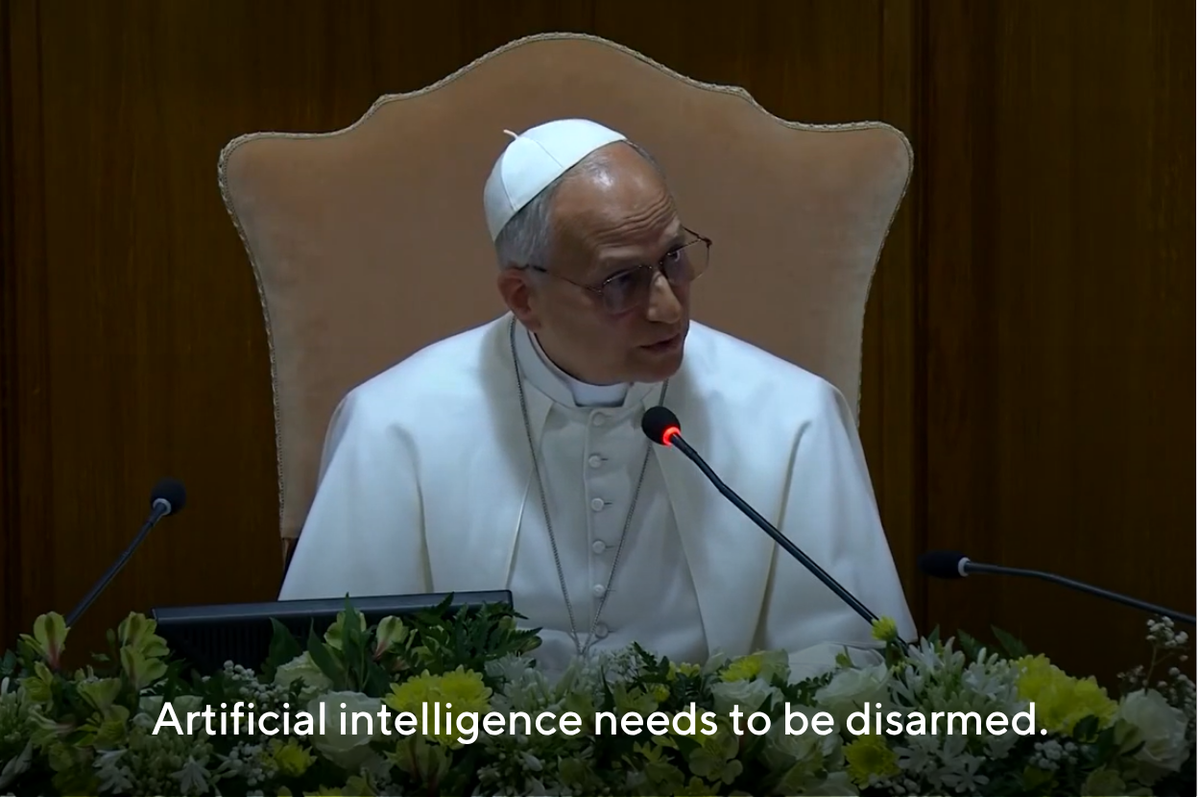
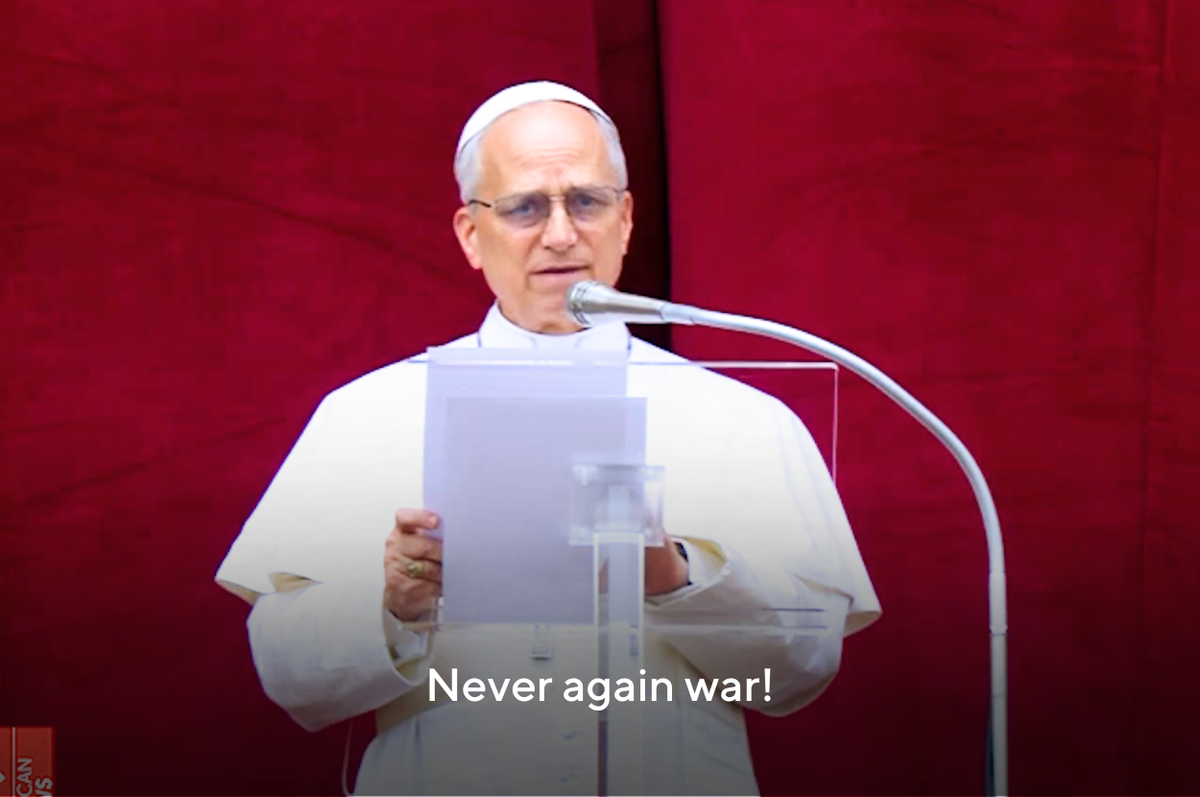
Pope Leo XIV has warned that artificial intelligence (AI) must be “disarmed”, saying the world must make sure the technology serves humanity rather than replaces or controls it.
On Monday, May 25, the Vatican presented Pope Leo’s first encyclical, “Magnifica Humanitas,” a 42,000-word manifesto that focuses on “safeguarding the human person in the time of artificial intelligence.”
An encyclical is one of the Catholic Church’s most authoritative letters, usually addressing major moral or social issues.
The document, which was signed on May 15, marks one of the Catholic Church’s strongest interventions yet on AI.
Speaking at the Vatican on Monday, Pope Leo said AI is already affecting “decisions that shape human coexistence” and is “dramatically changing how war is waged.”
He compared the current AI revolution to the Industrial Revolution, which his namesake Pope Leo XIII responded to in 1891 with "Rerum Novarum", the landmark encyclical on workers’ rights, inequality and capitalism.
“Today we find ourselves facing a transformation of similar magnitude, with perhaps even greater consequences,” Pope Leo said.
The pope said AI should not be feared but warned that it cannot be allowed to develop without moral responsibility, public accountability and human control.
“Artificial intelligence needs to be disarmed,” he said, adding that the phrase was deliberately strong because the moment requires words that can “awaken consciences.”
He warned that AI risks reducing people to data, productivity and cognitive performance, rather than treating them as human beings with dignity, freedom and conscience.
He also raised concerns about the hidden human and environmental costs, saying “nothing in the world of AI is immaterial or magical” and warning that technology cannot be considered liberating if it is built on exploitation.
The pope also pointed to the risk of algorithms blocking people from healthcare, employment or security based on biased or unjust data.
“Let’s not fear artificial intelligence, but constantly keep the question of the human in play,” he said.
You Might Also Be Interested In
 Sofia Hou
 Cherry Mohamed
 Cherry Mohamed