In An Unprecedented Mass Crossing, About 50,000 People From Morocco Entered Spain’s African City Of Ceuta
Crowds of people entered Ceuta by swimming around coastal barriers, climbing fences or crossing overwhelmed border areas.

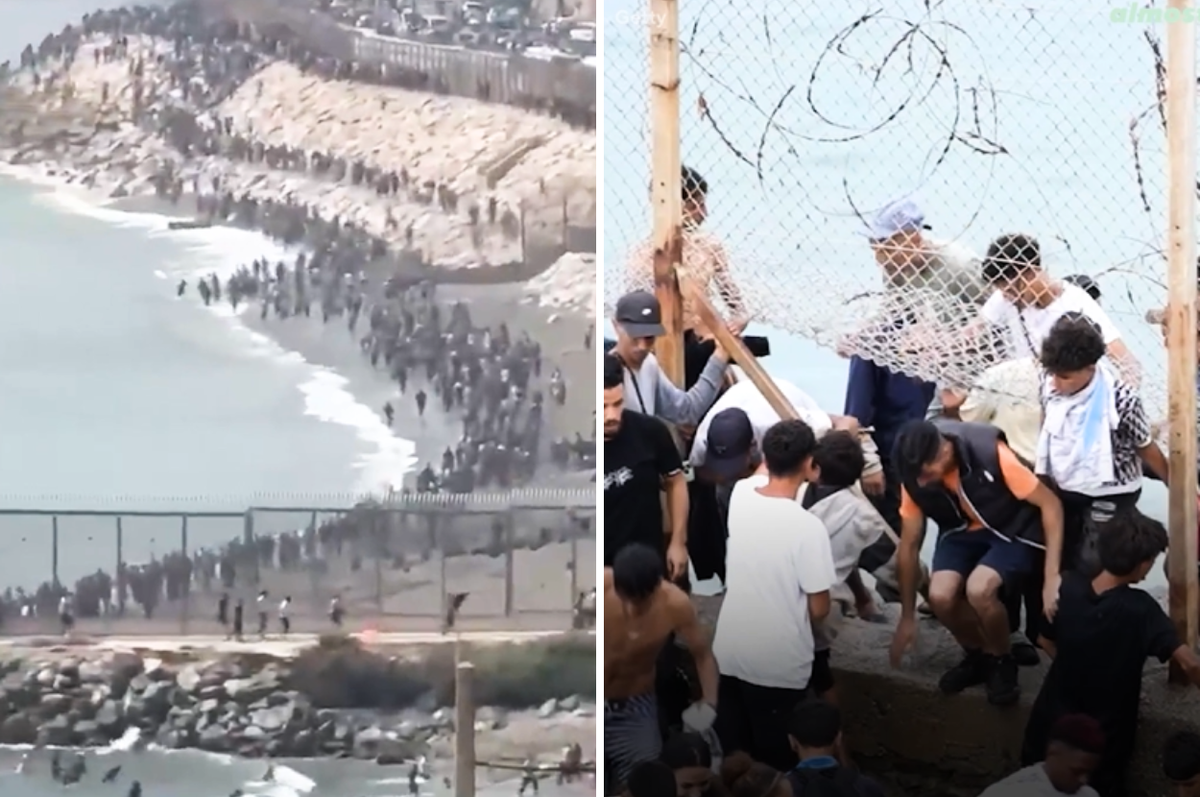
About 50,000 migrants from Morocco entered Spain’s North African territory of Ceuta in an unprecedented mass crossing on Thursday, July 30, but most have since returned to Morocco, Spanish authorities said.
Ceuta is one of the EU’s only land borders with Africa and has been under Spanish rule since 1580, though Morocco has claimed it since gaining independence in 1956.
Starting Thursday, July 30, crowds of people, most of them young Moroccans, began entering Ceuta by swimming around coastal barriers, climbing fences or crossing overwhelmed border areas.
Tens of thousands of people had arrived by Thursday and continued into Friday, increasing Ceuta’s population of 84,000 by more than half.
Ceuta's regional president Juan Jesús Vivas declared an "absolute humanitarian and social emergency" and called on Madrid to send troops.
The exact reason so many people crossed to Ceuta is not clear.
Social media posts had falsely suggested that migrants who reached Ceuta by sea would not be returned and would be able to travel onward into Europe.
The misinformation is linked to a misinterpretation of a Spanish supreme court ruling earlier in June stating that Spanish authorities cannot deport migrants who arrive by sea without due process, because they did not cross the physical border infrastructure referenced in Spanish law.
The ruling means authorities cannot push migrants back to the sea, but it does not mean authorities cannot deport them back to their countries.
Experts say economic hardship and high youth unemployment in Morocco may have also contributed to the crossing, according to Reuters.
Spanish prime minister Pedro Sánchez called the mass crossing a “violation of Spain’s territorial integrity” that deserved the country’s “strongest possible condemnation.”
He said Spain would remain “resolute in guaranteeing security” and blamed human trafficking networks for spreading misinformation that encouraged people to attempt the crossing, according to Euronews.
By Friday evening, around 48,300 of the roughly 50,000 people who crossed into Ceuta between Thursday and Friday, July 31, had voluntarily returned back to Morocco, according to Reuters.
Many left Ceuta after finding overcrowded conditions, little food or shelter and no direct route from Ceuta to mainland Spain or the rest of Europe.
At least 67 people died after drowning or being crushed during the crossings, Spain said on Saturday, Aug. 1, according to AP.
Spain deployed soldiers and additional police to Ceuta, while Moroccan forces moved to prevent further crossings.
Spain also began installing a 500-meter floating barrier off Tarajal beach to deter people from swimming around the border.
22 EU governments called for an emergency meeting on border security, while some politicians called for Spain to be excluded from Europe’s passport-free Schengen area.
Meanwhile, Italy temporarily reintroduced border checks on arrivals from Spain for 30 days, and France ordered extra checks along its border with Spain.
Sánchez said those demands were “driven by prejudice, fake news, ignorance, or political interest.”
He called Italy’s response as “selfish, polarizing and unlawful,” saying the EU could not afford that kind of division.
Although the mass crossing has largely ended, Spanish authorities are still determining how many children and asylum seekers remain in Ceuta.
You Might Also Be Interested In
 Cherry Mohamed
 Selina Wu