In A Landmark Vote, The UN Adopted A Resolution Declaring Countries Have A Legal Obligation To Stop Climate Change
It ruled that government actions driving climate change are illegal, and that countries are required under international law to reduce emissions.


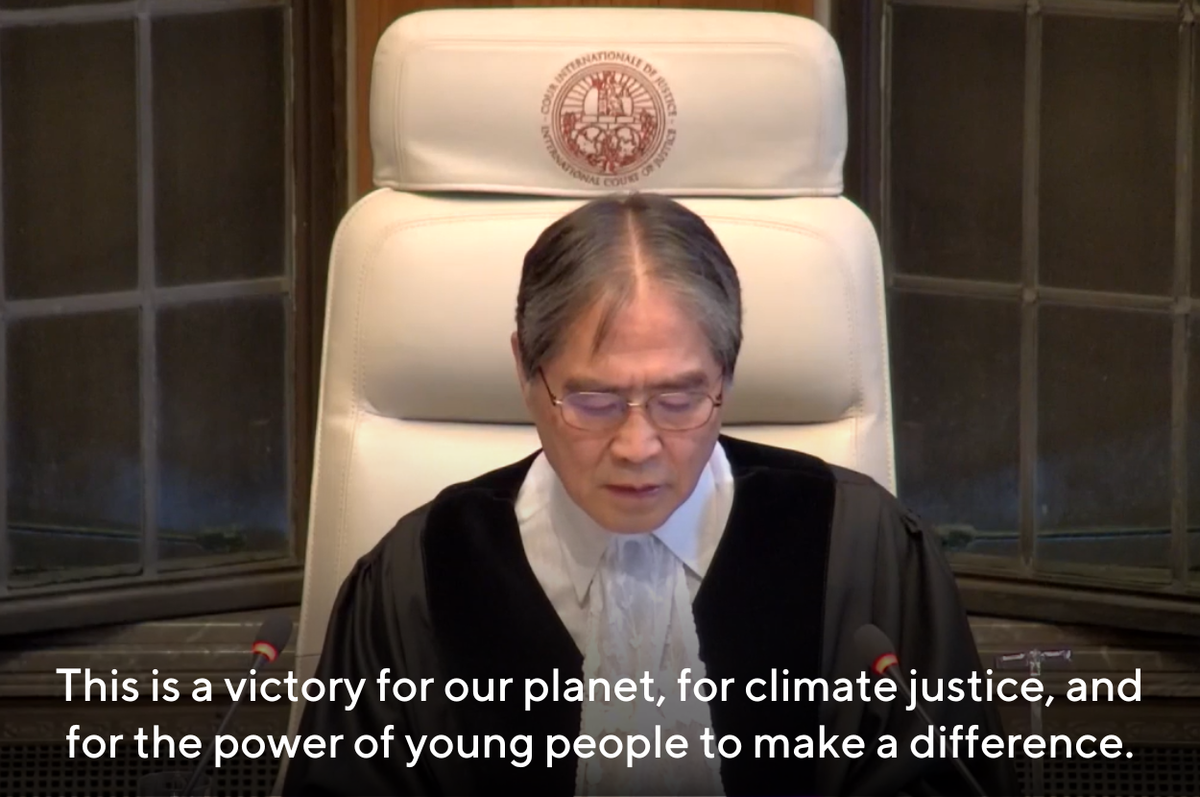
The UN General Assembly (UNGA) has adopted a landmark climate resolution supporting the historic ruling from the International Court of Justice (ICJ)that found climate change is an existential threat and that countries have a legal responsibility to protect the environment and cut their emissions.
In July 2025, the ICJ delivered a unanimous advisory opinion that countries have a legal obligation to reduce their greenhouse gas emissions and can be held liable for failing to act.
It ruled that government actions driving climate change are illegal, and that countries are required under international law to reduce emissions, prevent harm and collaborate to protect vulnerable populations.
The court also said that failing to take appropriate action on climate change could amount to an "internationally wrongful act" under international law.
The ruling came six years after a group of students across the Pacific Islands, the Pacific Island Students Fighting Climate Change (PISFCC), launched a campaign for the ICJ to issue an advisory opinion — or its legal opinion — on the link between climate change and human rights.
On Wednesday, May 20, the UNGA adopted a resolution endorsing the ICJ's opinion with 141 votes in favor, eight against — the US, Belarus, Iran, Israel, Liberia, Russia, Saudi Arabia and Yemen — and 28 abstentions.
The resolution explicitly reaffirms that countries have binding legal obligations under international law to protect the climate system and calls on all UN member states to comply with their obligations and prevent significant environmental damage.
Although the resolution, like the ICJ advisory opinion, is nonbinding, climate activists and legal experts say it could have major consequences for future climate lawsuits and international negotiations.
Courts and campaigners may now increasingly point to the ICJ opinion when challenging governments and fossil fuel companies over emissions, environmental destruction and climate-related harm.
Vanuatu's minister for climate change Ralph Regenvanu called the vote a victory for communities "on the frontlines of the climate crisis."
The US strongly opposed the resolution and reportedly lobbied countries behind the scenes to weaken support before the vote, according to Al Jazeera.
 Kassy Cho
 Kassy Cho